
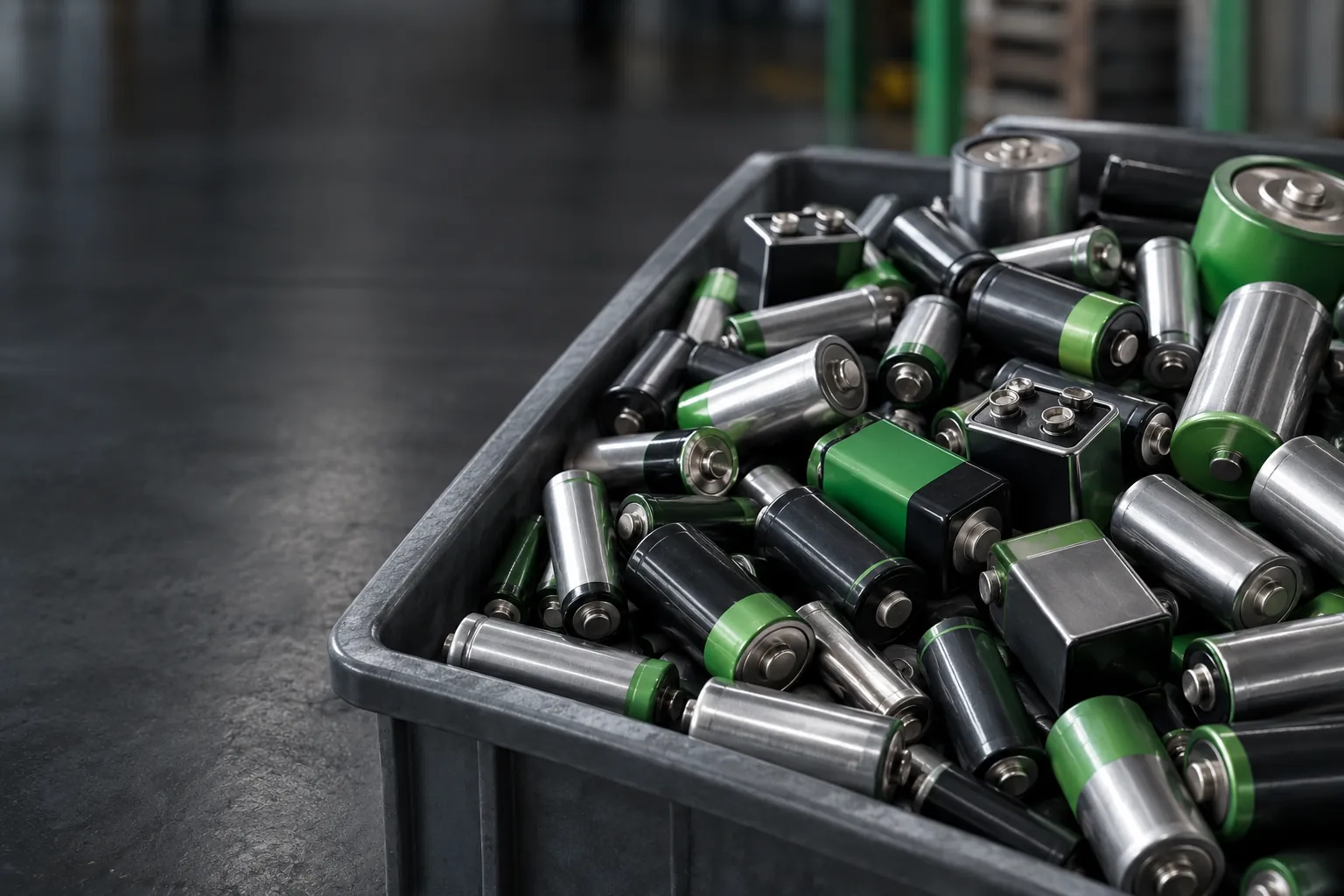
Archive review: Material Focus battery fire research published 10 May 2024. Retrospective article prepared and reviewed 6 October 2026.
A battery can be easy to miss inside a small electrical item. That is one reason a tidy-up at work can create a risk further along the waste collection route if devices are put in the wrong bin.
What was reported in May 2024?
Material Focus’s release of 10 May 2024 estimated more than 1,200 battery-related fires in UK bin lorries and waste sites over the preceding year. The figure was extrapolated from a local authority survey; it was not a complete count of every UK incident.
The research highlighted the risk from lithium-ion batteries damaged or crushed in waste handling. This is historical research, not a claim that the same number of fires occurred in 2026.
Hidden batteries can enter the wrong bin
Think beyond loose AA batteries. Cordless tools, mobile devices, headphones, handheld scanners and other portable equipment may contain rechargeable cells. Staff might identify the item as plastic or a small accessory without recognising the battery inside.
During a workplace clear-out, give small electricals a recognisable collection point. A sign showing common items can be more useful than a technical label alone. Ask cleaners and facilities staff to flag electrical items rather than placing them into everyday rubbish.
Damaged batteries need extra care
A swollen, leaking or damaged battery should not be treated as an ordinary mixed battery load. Report its condition and obtain instructions for the individual item. Do not puncture it, try to flatten it or force it out of equipment.
Collection preparation is different from responding to an incident. If a battery is smoking or on fire, raise the alarm, leave the area and call 999 rather than trying to complete a recycling booking.
Put a workable recycling routine in place
- Identify which teams generate loose batteries or battery-containing waste.
- Make the correct collection point easy to find.
- Arrange collections before containers become overcrowded.
- Tell the collector about damage or unidentified battery types.
Quality Waste offers business battery recycling and can discuss suitable storage solutions and regular collections. Send your postcode, a rough quantity if known and a photo taken only when safe. Read our damaged lithium battery guide for the next questions to ask.