
Guidance reviewed 6 October 2026.
If your business produces electrical waste regularly, a suitable container can make collections easier to manage. The right choice starts with the waste and how it can be placed inside safely, rather than choosing the largest bin available.
240L and 1100L bins for electrical items
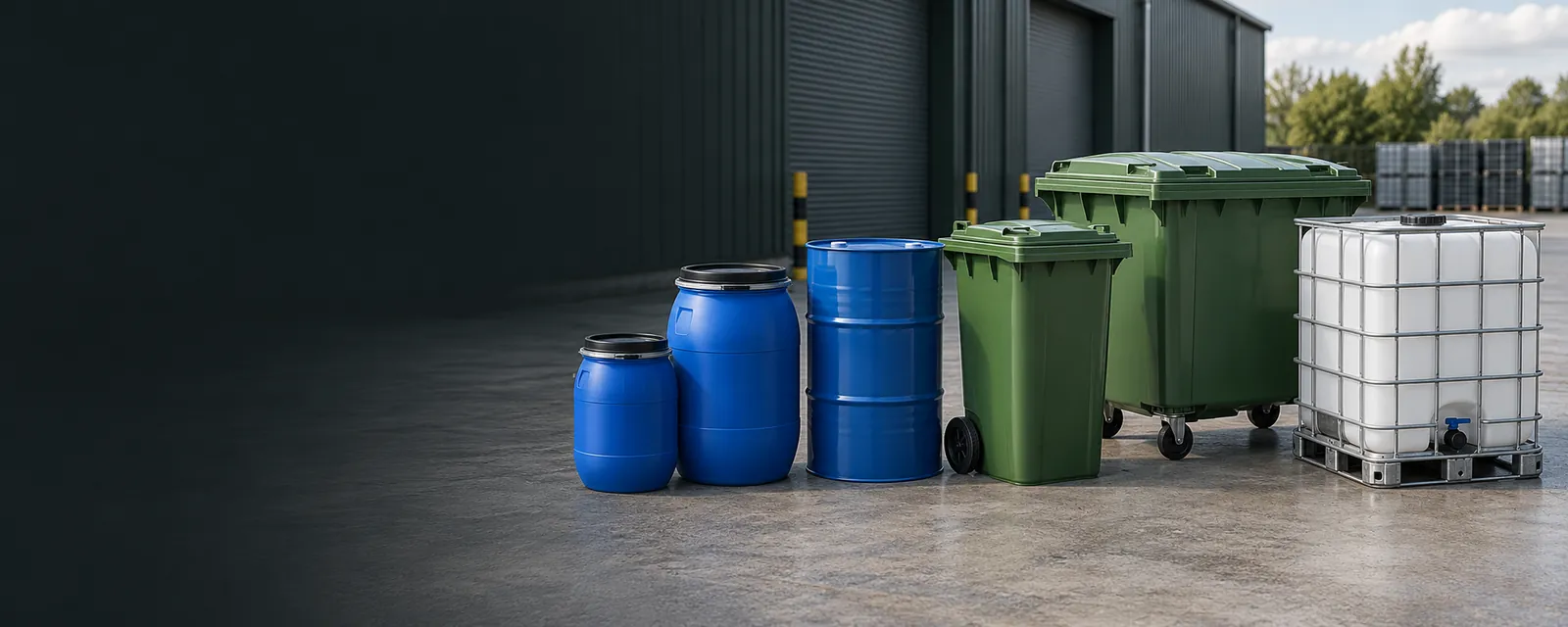
Quality Waste can discuss 240-litre and 1100-litre wheelie bins for suitable electrical items that fit safely. A container should not encourage staff to force in oversized appliances, break equipment or leave items protruding.
For toner cartridges, a 240-litre bin may be an option where agreed. Keep the cartridge collection separate from unrelated waste so the team can assess the material correctly.
Battery drums and specialist containment
Battery collections may use suitable 30-litre, 60-litre or 205-litre drums, while larger quantities can need other approved arrangements. The chemistry, condition and packing determine suitability. Damaged batteries need separate assessment.
The Environment Agency’s storage measures for permitted battery facilities prohibit waste battery storage in cut-off IBCs or loose bulk skips and specify suitable protection and containment. These are facility measures, not a universal packing instruction for every customer, but they show why an open bulk container is not automatically a safe battery solution.
IBCs and 205-litre drums can have uses for other assessed waste streams. Paint, oil and sealants each need suitable containment; do not mix them together because one container has spare space.
Where can the container be kept?
Containers can be discussed for indoor or outdoor locations, provided the waste, weather protection and access are suitable. Outdoor suitability depends on what is being stored and the container’s design, not just the space available.
Leave practical access for exchanging a full container. Tell us if the site has gates, steps or restricted vehicle access so the arrangements can be checked.
On-demand or scheduled exchanges
We can arrange an exchange when the container is full or agree a collection schedule. Costs depend on the collection arrangements, and most container services come with a minimum of two exchanges per year; confirm the terms for your quote.
Visit WEEE Container Services or ask about a container for your workplace. Describe the waste and where the container would sit, and we will help assess a practical option.