
Guidance reviewed 6 October 2026.
Old computers can hold sensitive information long after you stop using them. Secure hard drive shredding protects that information when you clear your unwanted IT, with a Certificate of Data Destruction included.
Which devices should you consider?
Start with computers, servers, phones and external storage. Ask your IT team about other equipment that may hold information, including printers or shared office devices; the presence and type of storage varies by model.
The ICO’s device disposal guidance explains that information can remain on storage even where a device is faulty. Deleting visible files or sending them to a recycle bin should not be treated as proof that storage is ready for disposal.
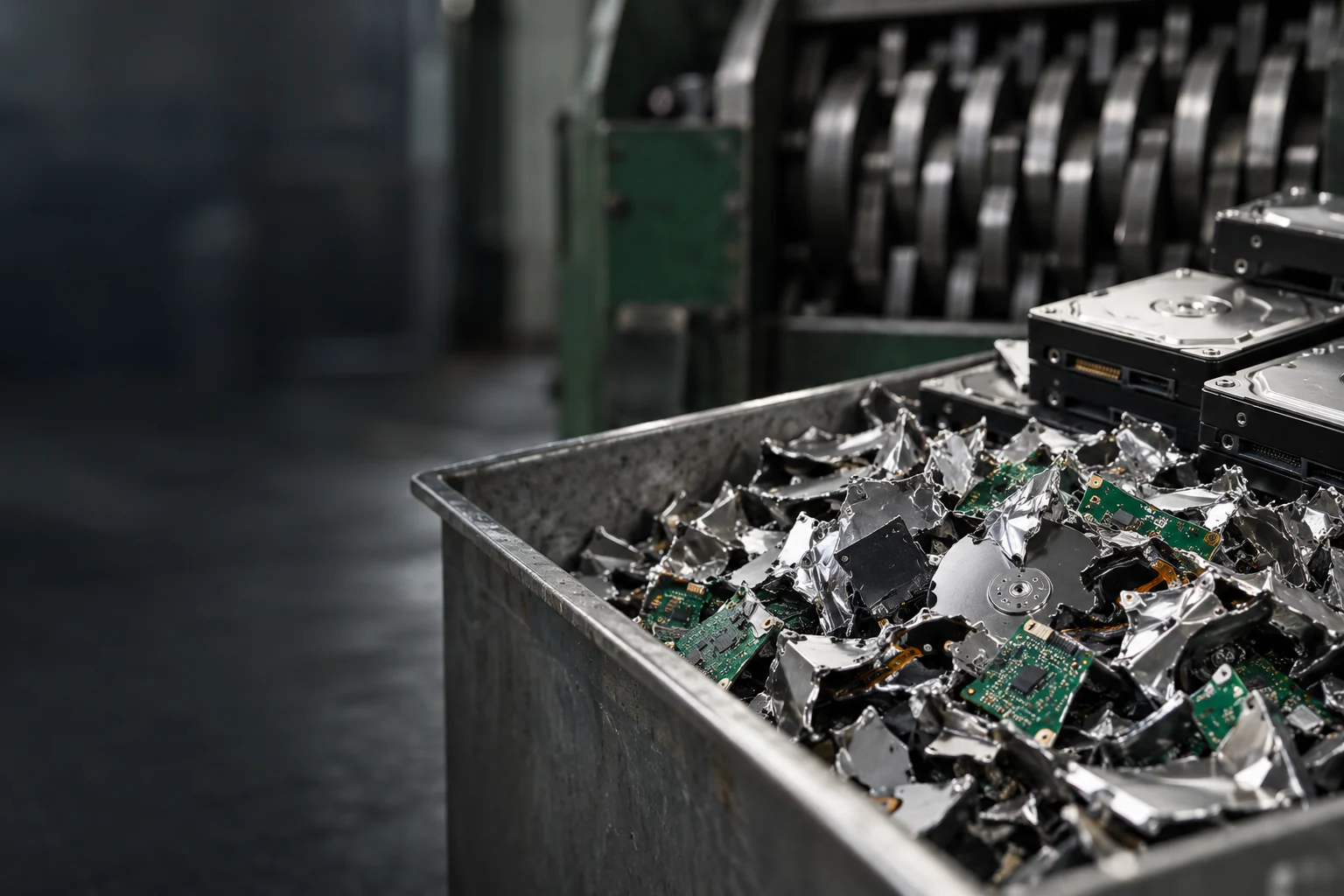
Quality Waste uses physical shredding
Our service shreds collected data-bearing media as standard and includes a Certificate of Data Destruction. This applies when data-bearing equipment is collected through our services; it is not an optional data add-on to a WEEE collection.
Before handover, confirm internally that the equipment can be released and that business records needed for ongoing operations have been retained. Destruction cannot be reversed by simply recalling a collected drive.
What does the certificate do?
A destruction certificate records the destruction service. Keep it with the collection reference and the relevant asset or project records so someone reviewing the clearance later can follow what happened.
A certificate is not a substitute for the decisions your business makes before collection. It also serves a different purpose from waste transfer or hazardous waste consignment paperwork.
Agree the records your organisation needs
If an internal audit requires device identifiers or other specific reporting, raise this when arranging the service. Confirm the level of detail that can be provided rather than assuming every certificate lists every individual component.
For small businesses, a collection reference linked to the original enquiry and disposal approval can make the records easier to retrieve. Larger organisations may prefer to link documents to an established asset register.
Do I have to remove hard drives myself?
Ask our team about the equipment as it is. Do not dismantle devices, especially those with integrated batteries, merely to prepare an enquiry. Tell us if drives have already been removed and are stored separately.
See data destruction services and business IT recycling, then request a quote with your postcode and a short description.