Guidance reviewed 11 October 2026.
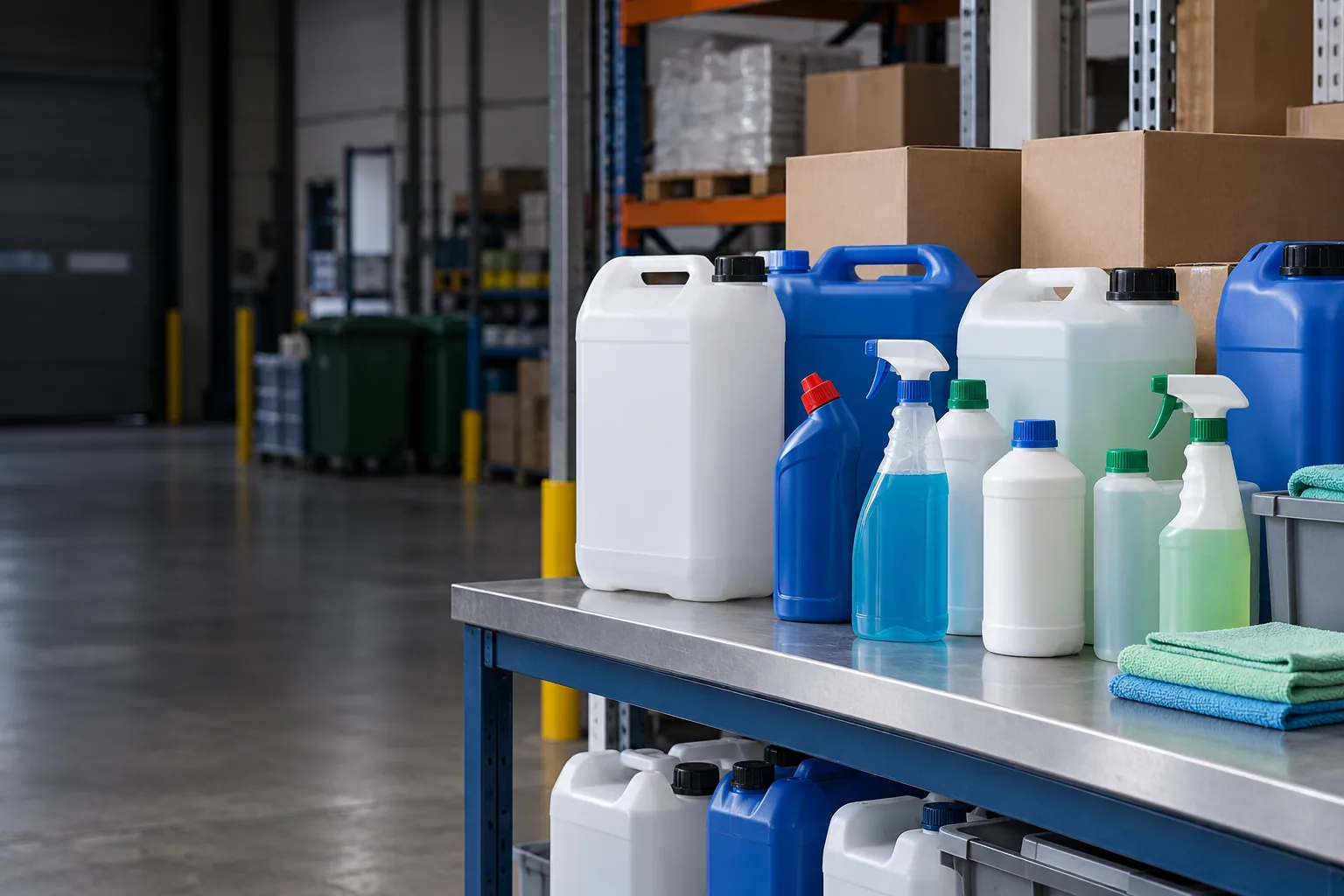
A change of cleaning supplier can leave cupboards full of unwanted detergents, disinfectants, degreasers and descalers. Clearing them safely means keeping products separate and identifiable. Do not treat a shelf of different cleaning chemicals as one liquid waste stream.
Keep products in their labelled containers
The product name and label help identify what is inside. A safety data sheet, if available, provides more useful information. Avoid transferring leftovers into drinks bottles or unlabelled tubs. If a container is unknown, tell the collector instead of trying to identify it by smelling or testing it.
Never mix products to save space
Combining chemicals can cause dangerous reactions. In particular, bleach should not be mixed with acids or other cleaning products. Keep incompatible materials separate and follow your workplace chemical controls. Do not neutralise waste yourself or pour a batch of unused chemicals down a drain.
Does every cleaning product need hazardous disposal?
No. Classification depends on the ingredients, concentrations and contamination. A detergent, a strong oven cleaner and a solvent degreaser may need different routes. A hazard pictogram is useful information, but the waste still needs the correct classification; a missing label is not evidence of safety.
What about damaged and leaking containers?
Restrict access and follow your site’s spill procedure. Do not have untrained staff move or decant unstable containers. If it is safe to take them, photos of the products and labels can help us understand what collection support is needed. Aerosols should be identified separately and must not be punctured.
An easier cupboard or warehouse clearance
Quality Waste offers cleaning chemical disposal for UK businesses. We can help with unwanted cleaning stock, redundant products and regular collections. Send some overall photos or a short list of product names, plus a rough box or drum count if you know it.
Some waste needs hazardous waste paperwork. The movement documents are distinct from a Certificate of Destruction where stock destruction is part of the service. For unwanted domestic products, check your local council’s household chemical instructions.
Further guidance
Business waste guidance. The GOV.UK sources above primarily cover England; check the relevant regulator’s requirements for Wales, Scotland or Northern Ireland.