Guidance reviewed 11 October 2026.
A laboratory clear-out can uncover expired reagents, partly used solvents and containers nobody recognises. The safest starting point is to preserve the labels and keep waste streams separate. Clearing bench space should not mean experimenting with the chemicals you want to remove.
Labels and product information are useful
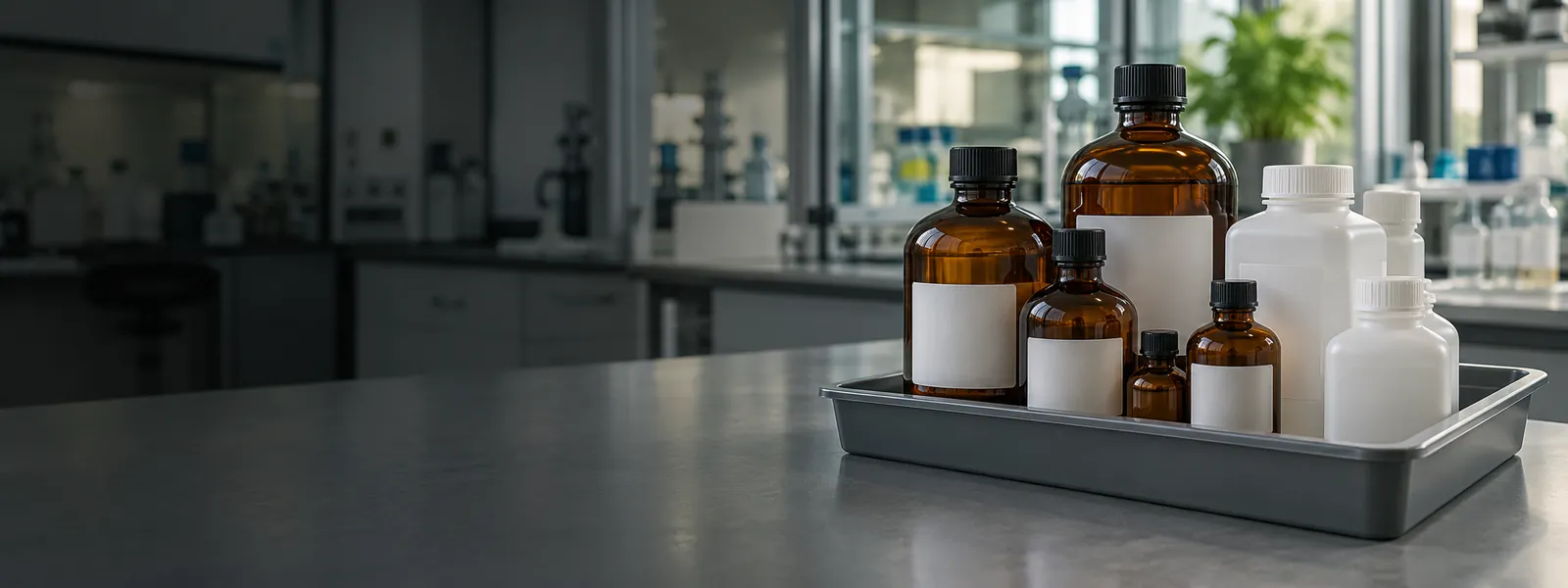
Keep chemical names, concentrations and available safety data sheets with the waste. Photos of readable labels can help a collector understand a load. Do not open unfamiliar containers, smell the contents or carry out a test simply to identify a substance. Tell us when identification is uncertain.
Separate chemical and biological waste
Solvents, acids, alkalis, reactive chemicals and contaminated equipment can require different handling. Biological or infectious materials are not interchangeable with general laboratory chemical waste. Keep those distinctions clear and follow your laboratory’s existing controls.
Avoid mixing or treating chemicals yourself
Do not combine small leftovers in one drum or neutralise chemicals without an authorised, controlled procedure. An old container may also present risks because of its condition or the material inside. Leaking, unstable or suspect containers need specialist advice before they are moved.
Equipment from a laboratory
Fridges, instruments and other electrical items may need a WEEE route as well as contamination checks. Quality Waste requires a decontamination certificate for laboratory fridges. Tell us about previous use and any chemical, medical or biological contamination before arranging equipment removal.
Planning a manageable collection
Our laboratory chemical disposal service helps businesses clear unwanted chemicals. Some overall photos and a short list of known substances are a useful first step. More detailed information may be necessary for particular hazards, but our team will explain what is needed rather than leaving you to guess.
Laboratory waste must be correctly classified. Hazardous waste movement paperwork and any destruction certificate serve different purposes; keep the records appropriate to your collection. A collection service does not replace the laboratory’s own safety procedures.
Further guidance
Business waste guidance. The GOV.UK sources above primarily cover England; check the relevant regulator’s requirements for Wales, Scotland or Northern Ireland.