
Guidance reviewed 8 October 2026.
Is your workplace recycling setup ready for Simpler Recycling? For many businesses in England, the rules are already in force. Smaller businesses have a later deadline, but now is a good time to work out which bins and collections you need.
This guide covers everyday workplace waste. It also explains where electrical equipment, batteries and chemicals fit into your wider business recycling arrangements.
What is Simpler Recycling?
Simpler Recycling is England’s system for making the collection of everyday recyclable waste more consistent. Under the government’s workplace recycling announcement, the main changes started on 31 March 2025.
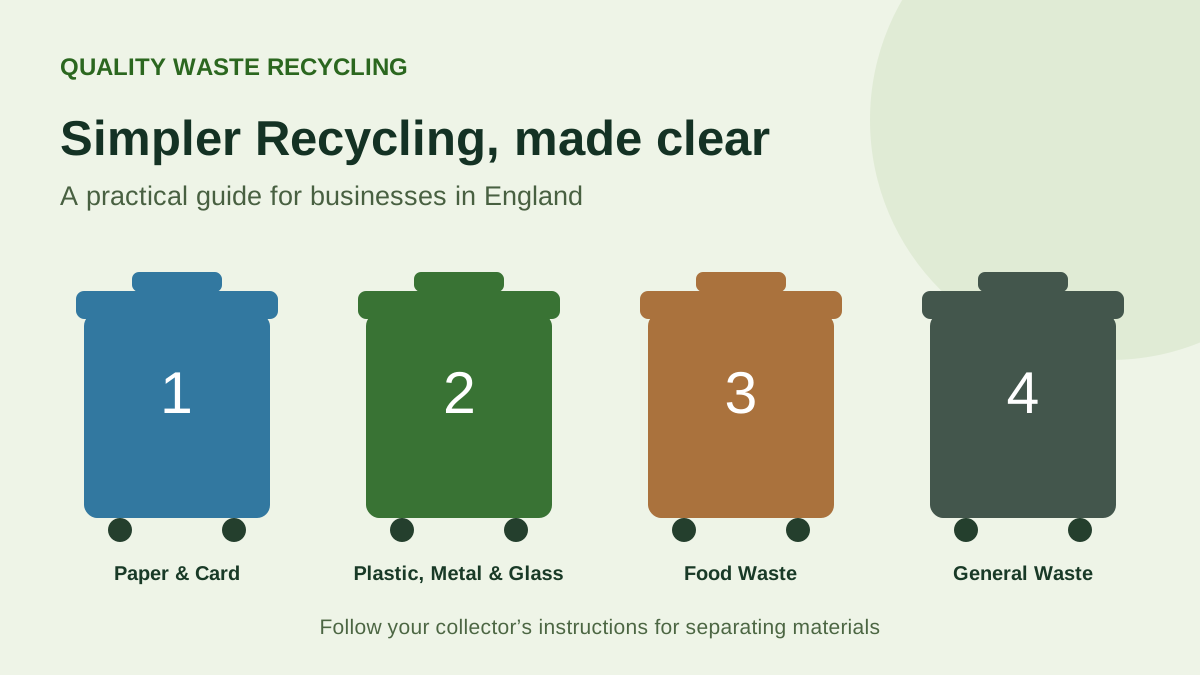
Workplaces separate dry recycling, food waste and residual waste—the rubbish left after recyclable materials have been removed. Dry recycling includes the relevant plastic, metal and glass packaging, plus paper and cardboard. These are England’s rules; Scotland, Wales and Northern Ireland have their own arrangements.
Simpler Recycling deadlines: 2025, 2026 and 2027
- 31 March 2025: the main workplace requirements started for businesses and organisations outside the micro-firm exemption.
- 31 March 2026: household recycling requirements began, with transitional arrangements for some councils’ food waste services. This is a separate timetable from workplace collections.
- 31 March 2027: micro-firms must comply. Plastic film and plastic bag collections also become part of the wider recycling requirements.
See the official household guidance and workplace announcement for the different timetables.
Does the small-business exemption apply to you?
A micro-firm has fewer than 10 full-time equivalent employees across the whole business, rather than fewer than 10 at each branch. Part-time hours count proportionately; volunteers, contractors and self-employed workers are excluded from this calculation. No application is needed for the temporary exemption. Defra explains the employee calculation.
For example, a business with three sites and five full-time employees at each has 15 employees in total. It should not treat each site as a separate micro-firm. If you are close to the threshold, check your staffing figures rather than relying on how small one office feels.
Which workplace bins do you need?
Start with the waste your workplace actually produces. A useful setup has clear places for:
- Paper and card: office paper, envelopes and cardboard packaging.
- Other dry recyclables: accepted plastic packaging, metal cans and glass bottles or jars.
- Food waste: lunch leftovers, fruit peel, tea bags and coffee grounds.
- General waste: items your collection service does not accept for recycling.
Paper and card should be collected separately from plastic, metal and glass unless the collector has a valid written assessment allowing co-collection. Ask your provider how its arrangement works; do not assume one mixed recycling bin is always sufficient. Read the paper and card guidance.
Food waste separation applies even to workplaces without a kitchen and even where very little is produced. A banana skin or leftover sandwich still needs the right route. Packaging marked compostable does not automatically belong in the food waste bin; check the official food waste guidance and your collector’s instructions.
Make recycling easy on a busy working day
Put bins where people use them, give the labels real examples and explain the setup to new starters. Try a quick walk around the workplace after lunch: if waste keeps appearing in the wrong place, change the layout or instructions. Treat that as useful feedback from the way the space works.
Agree the collection arrangements with your provider, including the containers and frequency that suit your business. Where a landlord manages shared bins, ask who is responsible for making the system work across the building. Staff and the public can report concerns—our workplace compliance article explains that route.
What about WEEE, batteries and chemical waste?
Keep old computers, loose batteries, lamps and waste chemicals out of everyday packaging recycling. Give those items their own storage and collection arrangements.
Quality Waste helps businesses with mixed WEEE recycling, battery collections, lamp and fluorescent tube recycling and hazardous waste disposal. For qualifying computer loads, our Free IT Collection service includes shredding of data-bearing media and a Certificate of Data Destruction.
Browse our free workplace recycling resources, or ask our friendly team about your specialist waste. Recycle today. A cleaner tomorrow.