Guidance reviewed 11 October 2026.
A fridge contains more than steel and plastic. Its cooling system, compressor oil and insulation need specialist treatment before suitable materials can be recovered. That is why fridge recycling is different from simply taking an appliance apart for scrap.
First, the fridge needs to stay intact
Do not cut refrigerant pipes, remove the compressor or break open the cabinet before collection. Damage can release substances that should be contained. Keep an unwanted fridge secure and tell the collector if it is already damaged, leaking or has had parts removed.
The cooling circuit is treated separately
At an appropriately authorised facility, specialist treatment removes refrigerant and compressor oil from the cooling circuit. The substances present depend on the appliance. Older gases and modern refrigerants have different hazards, so recovery needs suitable equipment and controls.
Insulation needs attention too
Some fridge insulation contains blowing agents used to make the foam. Dealing with these can require a further treatment stage, separate from the cooling circuit. Removing the refrigerant alone does not necessarily complete the fridge’s treatment.
Recovering the remaining materials
Once hazardous components and relevant gases have been dealt with, suitable metals and other materials can be separated. The exact process varies by appliance and treatment plant. Not every plastic or residue has the same recycling outlet, and specialist disposal may be needed for some fractions.
What does your business need to do?
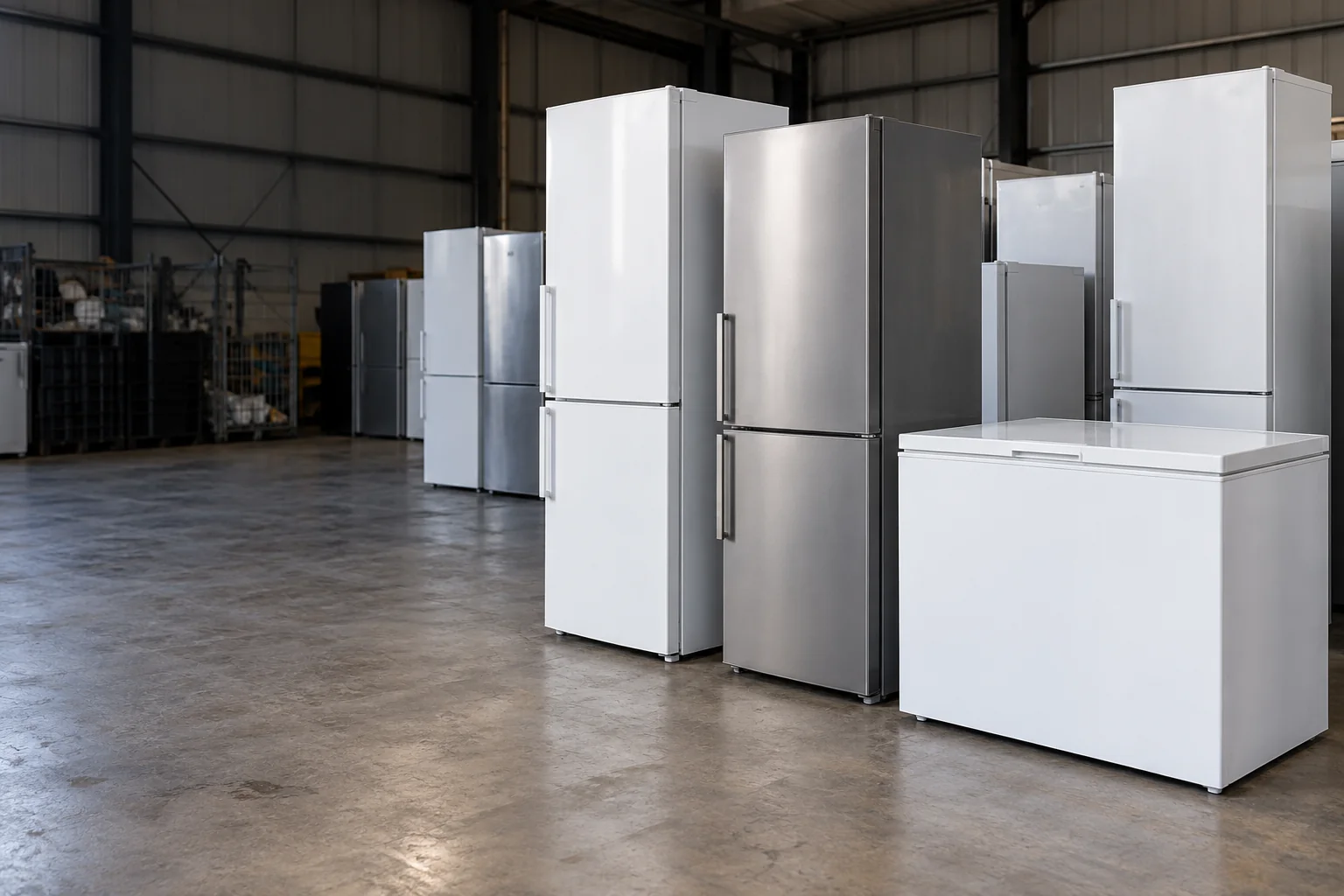
Empty the appliance of food or other contents, where safe, and arrange a specialist fridge and freezer collection. Tell us whether it is a domestic-style unit, commercial cabinet or laboratory fridge. Location, stairs and whether it is connected to a wider refrigeration system matter for removal.
Quality Waste arranges business fridge recycling; this description explains the wider treatment process and does not claim it all takes place at our premises. Laboratory fridges require a decontamination certificate, and you should tell us about their previous use.
Further guidance
Business waste guidance. The GOV.UK sources above primarily cover England; check the relevant regulator’s requirements for Wales, Scotland or Northern Ireland.